Leaders
Leading change with conviction
For leaders, Stakeholder Analysis highlights where sponsorship, dialogue and visible leadership may have the greatest effect. It helps leaders understand not only who has formal authority, but also who shapes trust, opinion and momentum.
Change Knowledge
stakeholder-analysis
How do you identify and understand the stakeholders who matter to your change?
Stakeholder Analysis helps you identify the people and groups who are affected by a change, can influence it or hold important knowledge about it. The goal is not simply to place names on a matrix. It is to understand interests, concerns, influence, relationships and the type of dialogue or involvement each stakeholder may need.
What is Stakeholder Analysis?
Stakeholder Analysis is a structured way to identify and understand the individuals and groups connected to a change. It considers how they are affected, what matters to them, how much influence they have, what information they hold and how their position may evolve as the change progresses.
Why does Stakeholder Analysis matter?
Change decisions are stronger when they reflect the perspectives and realities of the people involved. Stakeholder Analysis helps leaders avoid relying only on formal hierarchy or assumptions. It can reveal overlooked groups, competing interests, informal influence and important conversations that need to happen before resistance or misunderstanding becomes harder to address.
How do you conduct a Stakeholder Analysis?
Begin by identifying people and groups affected directly or indirectly by the change. Explore their interests, influence, concerns, relationships and likely impact. Use conversations and observation to test assumptions rather than treating the initial map as fact. Then decide where information, dialogue, involvement or leadership attention is most valuable, and revisit the analysis as relationships and positions change.
Step
1
Identify relevant stakeholders
List the people, groups and roles that are affected by the change, can influence it or hold important knowledge.
Step
2
Understand their perspective
Explore what matters to each stakeholder, including interests, expectations, concerns and potential benefits or losses.
Step
3
Assess influence and impact
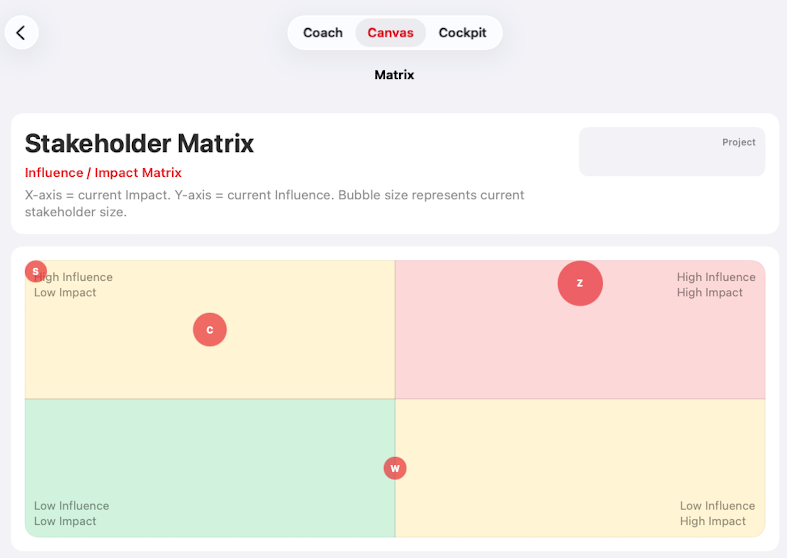
Consider how strongly each stakeholder can influence the change and how significantly the change may affect them.
Step
4
Map relationships and informal influence
Look beyond the formal organization to understand networks, trust relationships and informal opinion leaders.
Step
5
Test your assumptions
Use conversations, observation and feedback to validate what you think you know about each stakeholder.
Step
6
Define the engagement need
Decide where information, dialogue, involvement, sponsorship or targeted support will add the most value.
Step
7
Prioritize attention
Focus leadership and change effort on the stakeholders and relationships most critical to successful implementation.
Step
8
Review the map over time
Revisit stakeholder positions and relationships as the change develops and new information becomes available.
Project Manager
Keep Change and delivery connected
For project managers, Stakeholder Analysis makes people-related dependencies visible alongside technical delivery. It helps anticipate where decisions, implementation or adoption may depend on specific groups, experts or influencers.
Change Professional
Bring rigor without the busiywork
For change professionals, Stakeholder Analysis provides a foundation for engagement, communication, involvement and resistance work. It helps tailor interventions to different needs rather than treating the organization as one audience.
How can Change Canvas help you?
Change Canvas provides a structured workspace for mapping stakeholders, considering influence and impact, and connecting stakeholder insights with the broader change journey. Those insights can then inform communication, involvement, impact analysis and leadership actions.